Video Marketing
Product & Demo Videos
Conversion & SaaS Growth

Dixie
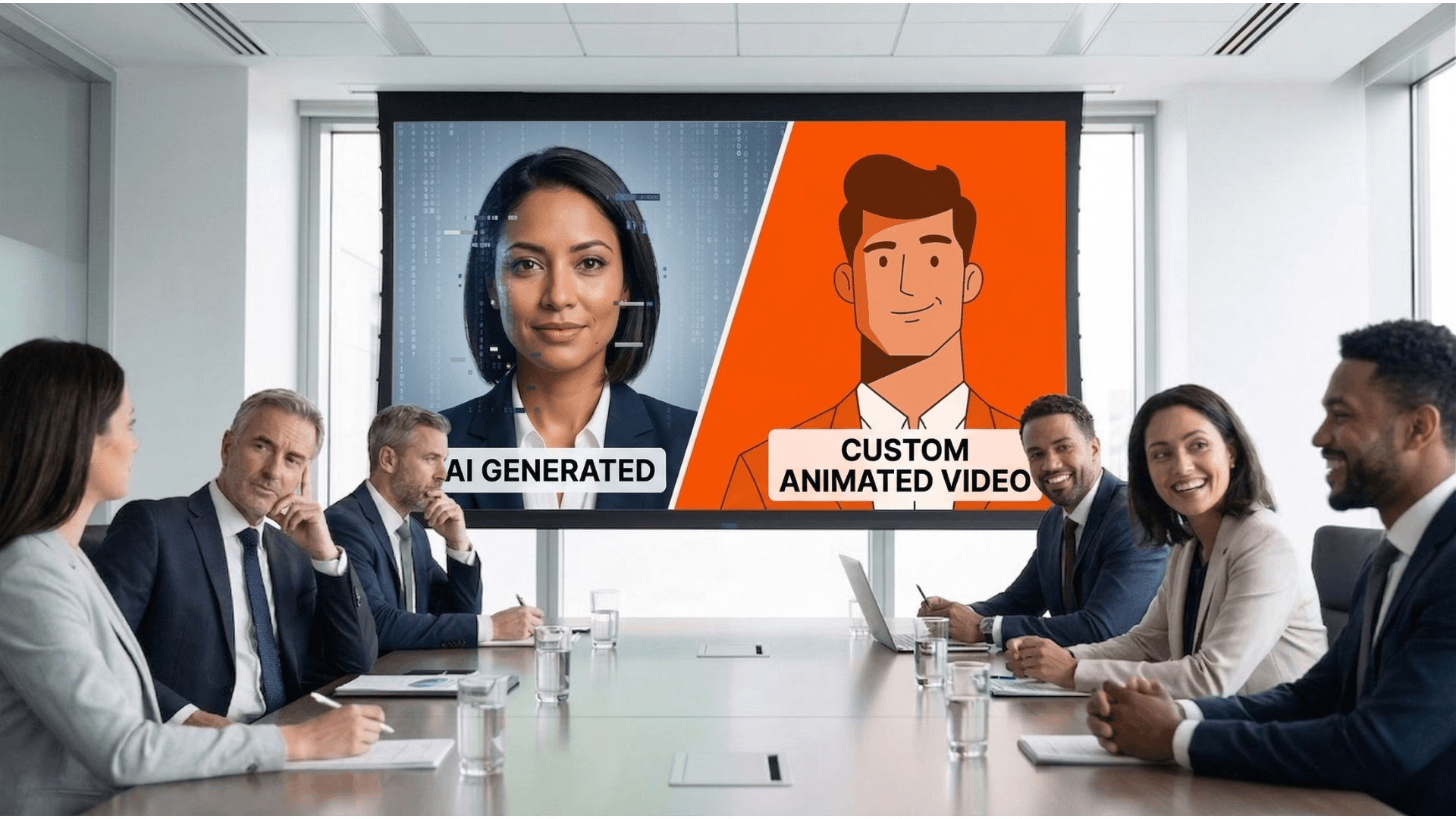

Using an AI avatar to sell your $1,200/month Enterprise SaaS is like wearing a tuxedo t-shirt to a board meeting.
Sure, it's technically formal. Sure, it cost you $19.99 instead of $1,500. And sure, from across the Zoom screen, maybe — maybe — someone squints and thinks you're wearing the real thing.
But the second they look closer? You've told them everything they need to know about how seriously you take this pitch.
That's exactly what's happening right now with AI video generators. SaaS founders are hearing the same siren song: production costs dropped 91%. Generate a 60-second explainer in 27 minutes instead of waiting 2 weeks. No more agency fees. Just type a script, pick an avatar, and ship.
And then they watch their enterprise pipeline evaporate.
The Temptation Is Real — And So Is the Cost
The AI video market hit $18.6 billion in 2026, up from $5.1 billion in 2023. AI video tools generate over 124 million monthly active users across platforms. Production costs collapsed from $4,500 per minute to roughly $400 per minute.
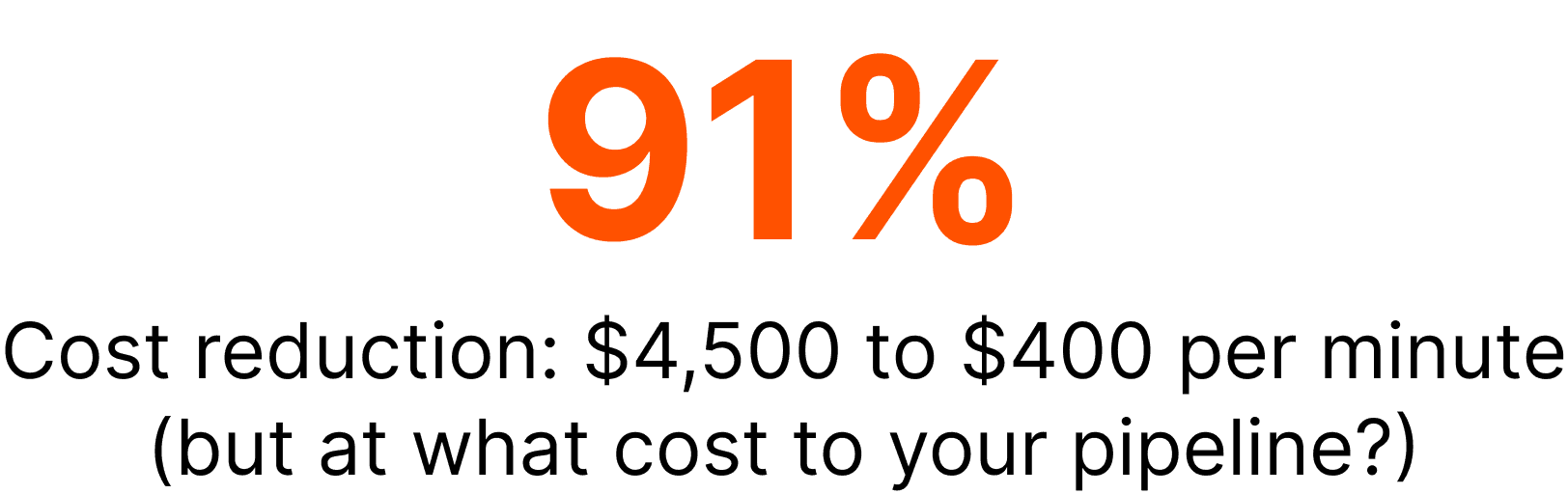
If you're a bootstrapped SaaS founder staring at a $2,500 custom animation quote, the math looks obvious: why pay 6X more when AI can do it for $400?
Here's why: because AI-generated testimonial videos tested 43% lower on trust scores compared to real customer videos — even when viewers couldn't articulate exactly what felt "off."
That's not a rounding error. That's your enterprise buyer's gut screaming "something's wrong here" while their brain is still processing your value prop.
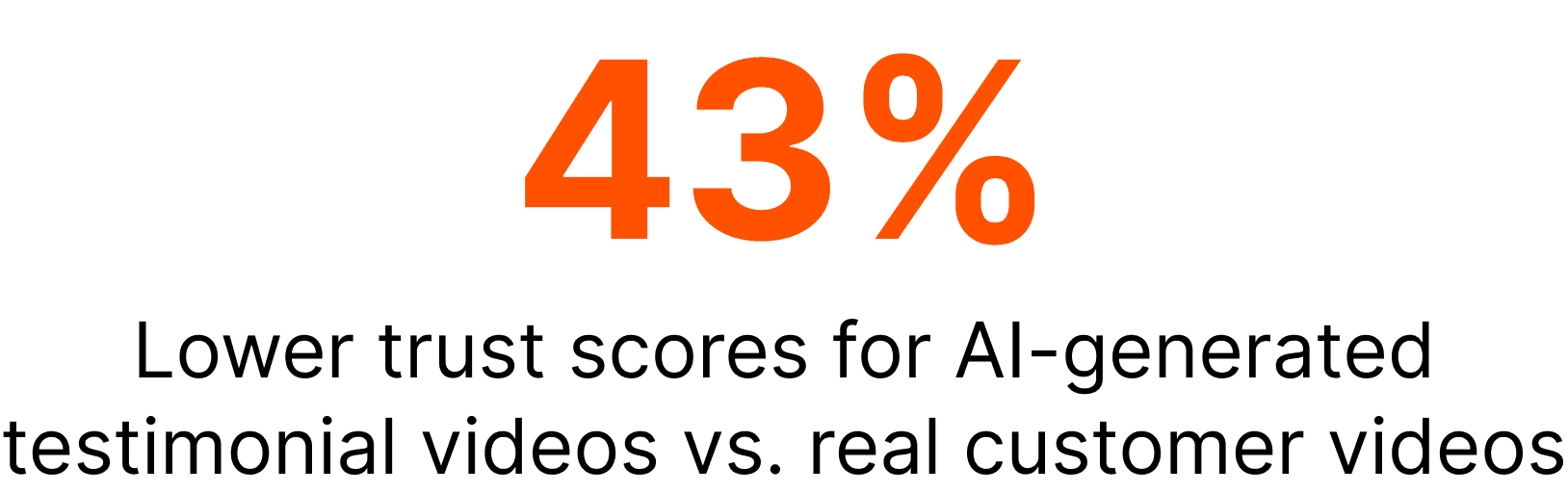
"We tested AI-generated testimonial videos against real customer videos. The AI versions had 43% lower trust scores, even when viewers couldn't articulate exactly what felt 'off.'" — Research on AI video trust perception, 2026
The Explainerz Fix
Custom animation doesn't just look different, it signals investment. When a buyer sees a $1,200/month product explained through a Synthesia avatar, they're processing: "This company couldn't afford a real video." When they see tailored storytelling, brand-matched illustration, and intentional pacing? They're processing: "This company is serious." That's the difference between a qualified demo request and a tire-kicker.
Custom animation for SaaS explainer videos signals brand credibility and investment to enterprise buyers, while AI avatars trigger subconscious trust penalties that cost deals.
The Uncanny Valley Isn't a Bug — It's Your Conversion Rate
The concept is simple: AI triggers the uncanny valley when it crosses approximately 60-65% perceived human-likeness. Below that threshold, users accept it as a functional tool. Above it — especially between 70-90% — users notice failures in empathy, emotional timing, or consistency, producing clear rejection and a feeling of manipulation.
Your AI avatar doesn't need to be bad to hurt you. It just needs to be almost human.
Here's what enterprise buyers see when they watch your Synthesia explainer:
Lip-sync that's 98% accurate (which means 2% of the time, it's unsettling)
Micro-expressions that respond to vocal tone but miss emotional context
Delivery that feels rehearsed, not conversational
A face they've seen in 47 other SaaS explainers this month
Individually, none of these are deal-breakers. But together? They create what one marketing director called "the creepy sensation on the back of your neck." That sensation doesn't show up in your Google Analytics. It shows up in deals that go dark after the demo.
The Explainerz Fix
AI avatars work beautifully for internal training videos, onboarding walkthroughs, and rapid content iteration where trust is already established. For customer-facing explainers selling a $14,400/year contract? You need storytelling designed for humans, by humans. That means character animation that conveys emotion, pacing that matches decision-making rhythms, and a voice that doesn't sound like it's narrating a compliance module.
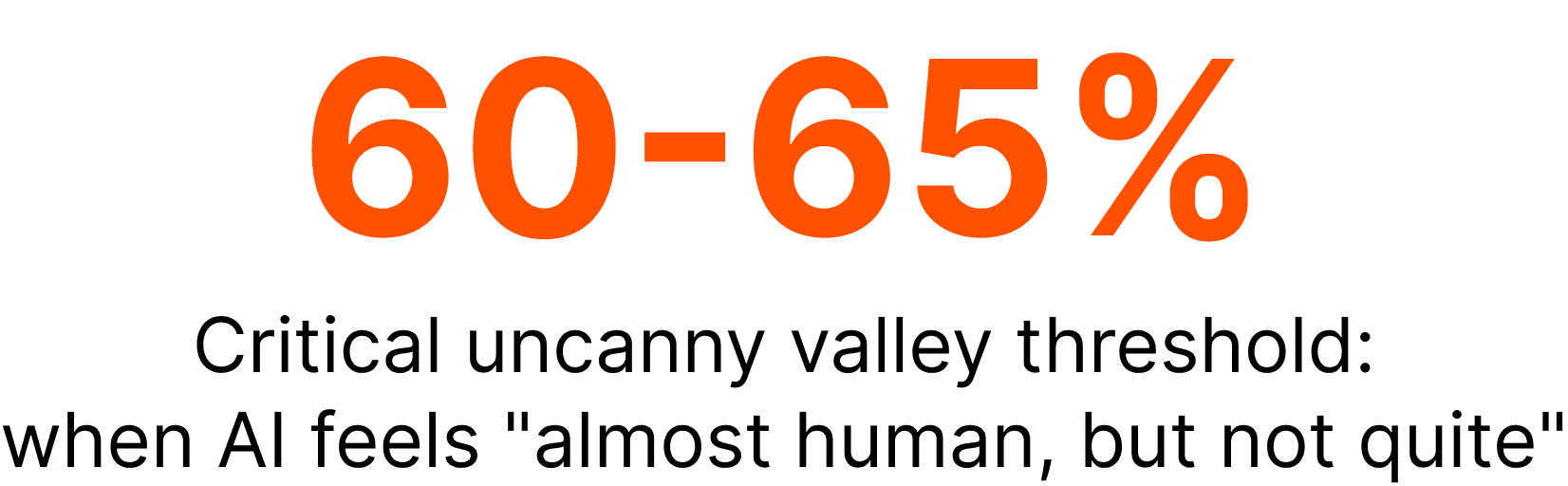
The uncanny valley effect costs SaaS companies enterprise deals by triggering subconscious distrust when AI avatars cross 60-65% human likeness without emotional authenticity.
Where AI Actually Works (And Where It Sabotages You)
Let's be clear: AI video generation isn't universally bad. It's just catastrophically misapplied.
Where AI video generators win:
Internal employee training at scale (200+ videos, consistent messaging)
Rapid iteration on messaging before committing to final production
Localization and translation of existing content into 140+ languages
High-volume social content where brand polish matters less than velocity
Where AI video generators cost you deals:
Homepage explainer videos (your first impression to cold traffic)
Product demo videos sent to enterprise decision-makers
Customer testimonials (the irony of an AI avatar vouching for your product)
Investor pitch decks (VCs can smell cost-cutting desperation)
The pattern? AI works when trust is already established or when the stakes are internal. It fails when you're building trust with someone who's about to write a check.
Here's the test: if this video is going to be seen by someone who's never heard of you, who's comparing you to 4 competitors, and who has the authority to sign a $50K contract — can you really afford to let a Synthesia avatar do the talking?
The Explainerz Fix
Use AI for internal iteration. Script drafts, storyboard concepts, rapid A/B testing on messaging — AI accelerates that. But when it's time to show the world what your SaaS actually does? Invest in custom animation that matches the contract value you're asking buyers to sign. A $1,200/month product deserves more than a $29/month Synthesia plan.
AI video generators work for internal training and rapid iteration, but fail for customer-facing SaaS content where trust-building determines contract value.
The Real Cost: Pipeline Velocity, Not Just Production Budget
SaaS founders optimizing for production cost are solving the wrong problem.
The question isn't "How do I make a video for $400 instead of $2,500?" The question is "How do I make a video that converts 5% more demo requests into closed deals?"
Let's do the math:
1,000 monthly website visitors
3% watch your explainer video (30 viewers)
15% of viewers request a demo (4.5 demos)
20% close rate on demos (0.9 deals/month)
$14,400 ACV
That's ~$13,000/month in closed revenue from your explainer video.
Now run it again with a 43% trust penalty:
Same 30 viewers
But only 57% of them psychologically trust what they're seeing
15% request rate * 0.57 trust factor = 8.5% actual conversion
That's 2.6 demos instead of 4.5
0.5 deals/month instead of 0.9
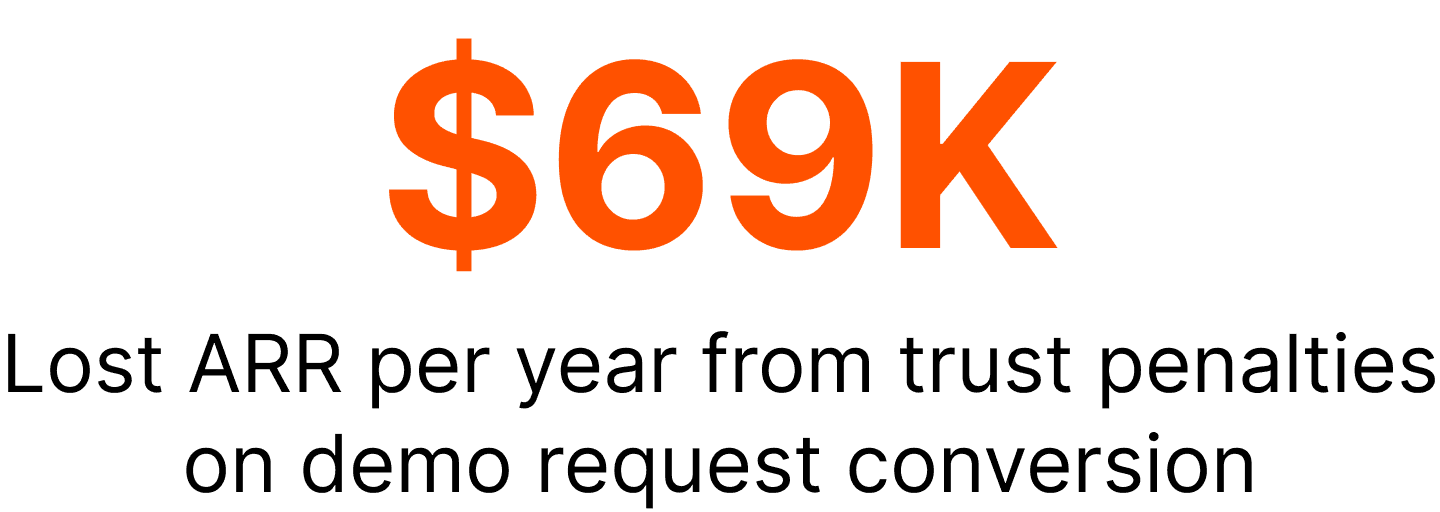
You just lost $5,760/month in revenue to save $2,100 on production.
Over 12 months, that's $69,120 in lost ARR because you chose the $400 video over the $2,500 video.
Still think the AI avatar was cheaper?
The Explainerz Fix
Enterprise buyers are pattern-matching for credibility signals in the first 10 seconds. Custom animation sends the signal: "We invest in how we communicate." AI avatars send the signal: "We cut corners where we think you won't notice." That difference shows up in pipeline conversion rates, not just video production costs. Track deal velocity, not just watch time.
Choosing AI avatars over custom animation for SaaS explainers can cost $69,120 in annual recurring revenue when trust penalties reduce demo request conversion rates.
The Explainerz Play: AI for Iteration, Humans for Credibility
Here's what the smart SaaS companies are doing in 2026:
Phase 1: AI-Assisted Iteration Use ChatGPT to draft 5 script variations. Use Synthesia to generate rough video concepts. Test messaging internally. Kill what doesn't work.
Phase 2: Human-Created Final Asset
Once you know the message works, invest in a SaaS explainer video with custom animation, tailored storytelling, and professional voiceover. This is what goes on your homepage, in your pitch deck, and in your email sequences to enterprise buyers.
Phase 3: AI-Powered Localization
After your core video performs, use AI to translate and localize it into key markets. The trust is already built by the human-created original — AI just extends reach.
That's how you use AI without sabotaging your brand.
You don't choose between AI and agencies. You use AI where it accelerates, and you use human creativity where trust determines revenue.
Stop Optimizing for Production Cost. Start Optimizing for Trust.
The AI video generation explosion isn't going away. By 2030, the market will hit $356 billion. Every SaaS founder will face the temptation to cut video production costs by 91%.
The winners won't be the ones who resist AI entirely. They'll be the ones who understand where AI helps and where it hurts.
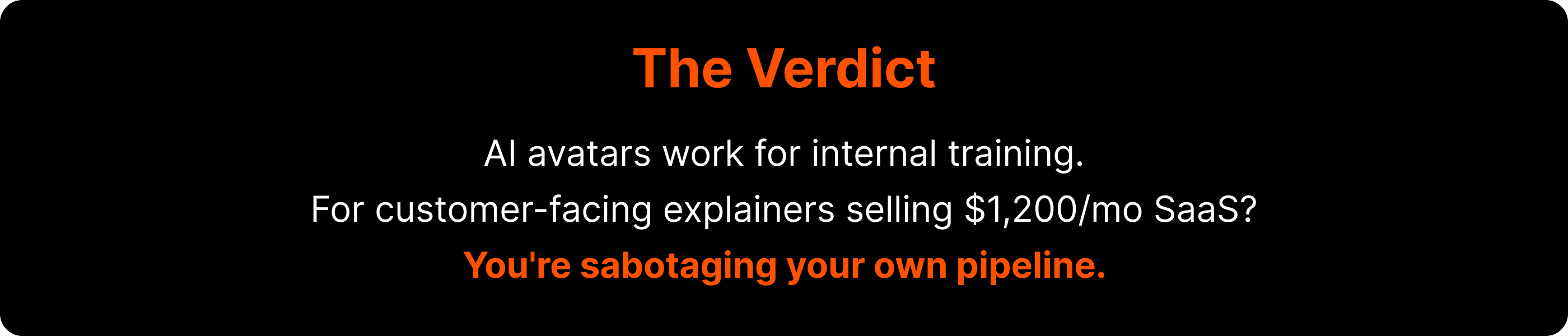
AI avatars work for internal training. They fail for customer-facing credibility.
AI scriptwriting accelerates iteration. It doesn't replace strategic storytelling.
AI localization extends reach. It doesn't build trust from scratch.
If you're selling a $1,200/month Enterprise SaaS, your explainer video is doing one job: convincing a skeptical buyer that you're the real deal. An AI avatar can't do that job. It can only undermine it.
Want to see what a real SaaS explainer video looks like — one that builds trust instead of eroding it? Check out our work or contact us for a free strategy call. We'll show you exactly where AI fits in your video strategy, and where it absolutely doesn't.
Because at Explainerz, we're not afraid to talk about AI. We're afraid of SaaS founders using it in the one place it kills deals: the first impression.
Ready to close the gap between production cost and pipeline value? Book a free strategy call →


